
BCM54610C1IFBG Gigabit Ethernet Transceiver: Datasheet and Design Guide
The BCM54610C1IFBG from Broadcom (now part of Avago Technologies) is a highly integrated, single-port Gigabit Ethernet transceiver designed to deliver robust performance in a wide array of networking applications. This physical layer (PHY) device implements the IEEE 802.3ab standard for 1000BASE-T operation, providing seamless connectivity over standard Category 5 unshielded twisted-pair (UTP) copper cabling. It serves as a critical interface between the media access controller (MAC) and the physical network medium, making it a cornerstone component in switches, routers, network interface cards (NICs), and embedded systems.
A core strength of the BCM54610C1IFBG lies in its advanced DSP-based architecture. This design enables sophisticated digital signal processing to achieve superior noise cancellation, echo suppression, and crosstalk mitigation. These capabilities are paramount for maintaining signal integrity and ensuring a stable, high-speed link at gigabit rates, even in electrically noisy environments. The device supports Auto-MDIX (Automatic Medium-Dependent Interface Crossover) on all speeds (10/100/1000 Mbps), automatically detecting and correcting for straight-through or crossover cable connections, which simplifies installation and eliminates user configuration errors.
Power efficiency is a key design consideration for modern electronics. The BCM54610C1IFBG addresses this through its support for Energy Efficient Ethernet (EEE or IEEE 802.3az), a crucial feature for reducing power consumption during periods of low data activity. By entering a low-power idle state, the PHY can significantly cut energy usage without sacrificing the ability to quickly resume full-speed operation when data traffic resumes. This makes it an ideal choice for green data centers and power-conscious applications.
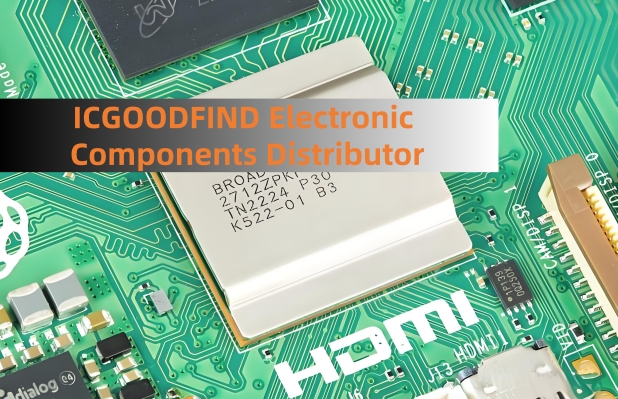
From a design perspective, the serial management interface (MDC/MDIO) is essential for device configuration and status monitoring. Designers must ensure clean trace routing for these signals to prevent communication errors with the MAC. Furthermore, meticulous PCB layout for the differential pairs (both the MDI interface to the RJ45 jack and the SerDes interface to the MAC/switch) is non-negotiable. These traces must be length-matched, impedance-controlled to 100Ω, and routed away from noisy digital or power supply lines to preserve signal integrity and minimize electromagnetic interference (EMI).
Power supply decoupling is another critical area highlighted in the design guide. The device requires clean, stable power for its analog and digital cores. Implementing a comprehensive decoupling strategy with a combination of bulk, ceramic, and high-frequency capacitors placed as close as possible to the power pins is vital for suppressing noise and ensuring stable operation.
Finally, the choice of the magnetics module (integrated or discrete) is a key system-level decision. The magnetics provide electrical isolation, impedance matching, and common-mode choke filtering. Designers must select a module that meets the IEEE 802.3 specifications and is well-matched to the PHY's characteristics to ensure optimal performance and meet regulatory requirements.
ICGOODFIND: The BCM54610C1IFBG stands out as a reliable and feature-rich Gigabit Ethernet PHY solution. Its integration of advanced DSP, support for Energy Efficient Ethernet, and Auto-MDIX functionality makes it a powerful and versatile component for designers building next-generation, high-performance, and energy-efficient network equipment. Careful attention to high-speed PCB layout, power integrity, and magnetics selection is paramount for a successful implementation.
Keywords: Gigabit Ethernet PHY, IEEE 802.3az (EEE), Auto-MDIX, Signal Integrity, Power Efficiency.

